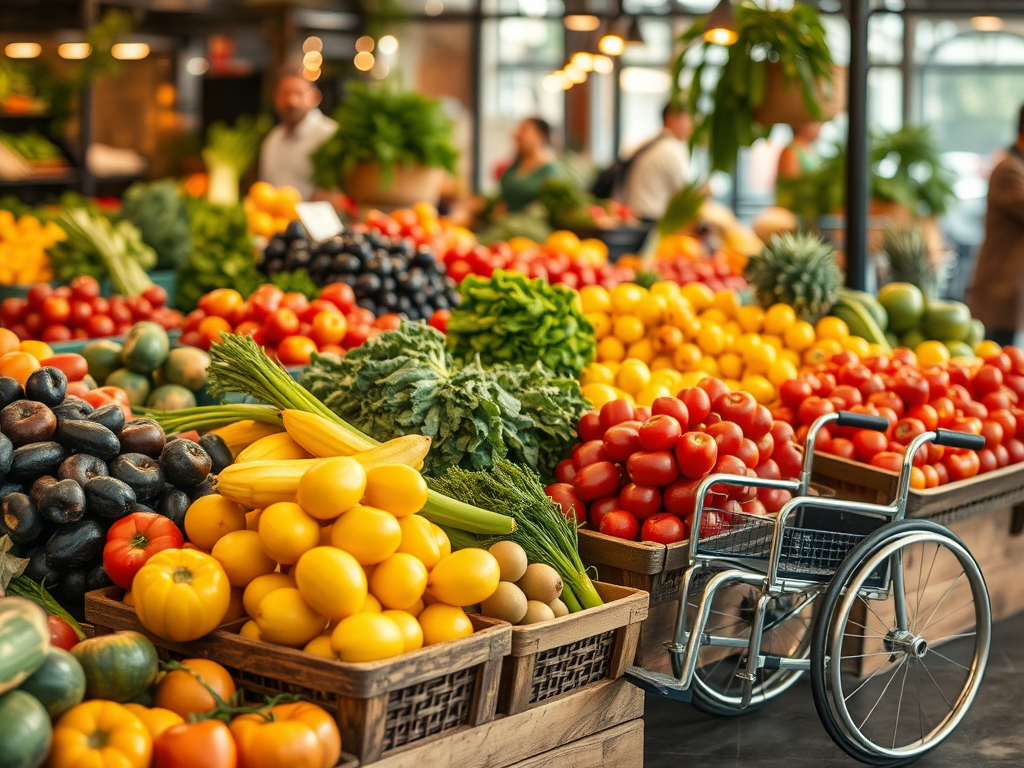
This piece was originally written for willowdove.com, way back in 2009 and rehomed here because it still rings true. I’ve been thinking a lot lately about clarity, inclusion, organic growth, and how we frame disability — for others, and for ourselves.
Not that long ago, the origin of the fruit and veggies in our supermarkets was a lot less important to the general populace than it is now. Barring the scandals of oil spills and reports of contamination, supermarket shoppers were largely content to believe that the fruit and vegetables being presented to us were the best that producers could provide. We believed, quite rightly in most cases, that the produce was good for us.
A small group of consumers however, were concerned that the pesticides used on the fruit and vegetables in our supermarkets might cause harm. They sought organic fruit and vegetables claiming that, for them, these products were better. These brave individuals were prepared to make choices, difficult choices at times about what they bought, from where and how much they paid. They were prepared to make sacrifices to ensure that they got the products they needed and they spread the word.
Slowly one or two became one or two hundred thousand and more. People were prepared to make the choice, pay the price and look a little harder for the products they wanted. The economics of supply and demand resulted in a price drop and more suppliers. The early adopters and those that made choices to include them, were rewarded with more change left in their pockets as producers scrambled to change their practices and their image to maintain market share.
Now we have reached a point where producers, marketers and suppliers of everything from toilet paper to coffee to cans of tuna, department stores and shopping bags strive to convince us that they are conscious of the planet, and the products are good for us as well as being good for the bottom line.
This is all great and important progress to not only our health and longevity but also the health and longevity of the planet. But it didn’t start with legislation, it started with people. Supply only increased when ordinary consumers demanded it and not just with their voices but with their wallets. It might still be easier for growers to use pesticides but it’s not good enough for many of us anymore.
Australia’s disability sector has waited 10 years for the Disability (Access to Premises – Buildings) Standards. The adoption of the Standards will be a step in the right direction although a lot depends on how they are enforced. With an aging baby boomer population used to being included and involved, I wonder if the Standards will be meet current, much less future demands.
So where is the connection between organic vegetables and accessibility? They are both about sustainability; they both need to be a matter of broad public interest, opinion and action before any significant change will occur; and a wide range of people need to choose differently – and with their wallets. Once it becomes a matter of money, businesses will see the value in changing access to their premises.
As several of my high school teachers pointed out, legislation must move slower than public opinion to prevent knee-jerk laws and a less stable judiciary. That makes sense. The aging of an active population is however, not a question of public opinion. And inclusion and equity are not new concepts: they are well recognised, well researched and established understandings.
My friends often have difficulty finding venues that I can access and any notion that in 2009 it is unlawful to construct an inaccessible building or run a discriminatory service is not borne out by actuality. Accessible venues are rare and tend to be expensive and sterile because it is the large organisations that are pressured to be accessible.
Even when some degree of access is provided, equity, independence and dignity can still be thwarted with things like platform lifts which, even if they work, often require someone with a key to operate them, or accessible toilets that need to be unlocked by the manager (frequently male), or having to wait an hour for buses where others wait 15 minutes. These experiences are common, and although better than 15 years ago, still frustratingly hard.
But change is happening and when the Standards come into effect I think people will become more conscious of the issues even if they don’t respond immediately. But without the impetus from commercial interests, the necessary changes will not come fast enough. Indeed, it may be far too easy for small businesses, schools and other organisations to be exempted from the access requirements; there are very few reasons to want to provide access.
Like the organic fruit and vegetable lobby, commercial stimulus is a great motivator. It is going to take a few brave souls with no need for ramps, rails, AusLan or Easy English, to join those of us who do need them, to start favouring businesses that are accessible and equitable. And we need to state why we are making those choices so businesses realize their decisions come at a cost or with rewards. Prices may be a little higher initially but as the weight of public opinion grows, businesses will have to look at making their outlets accessible. Legislation will follow demand and we will be ready for those vocal baby boomers.
(article written by me, image:AI)